Seen by most just briefly in the movie theater lobby, movie posters are actually a very popular collectible. Passionate collectors search high and low for vintage movie posters to proudly display – or sometimes keep hidden away safely in storage — taking care not to damage these sometimes valuable pieces. In fact, in October 2018, a rare original poster from the 1932 classic The Mummy was expected to fetch $1 million at auction.
If you’re a new poster collector or would simply like to improve your skills to protect and display your collection, follow our guide for move posters. (For additional tips, check out our guide on How to Frame a Poster)
Examine the Movie Poster
Before you begin, examine the poster carefully, especially if it is a vintage print. Some vintage movie posters – those printed before the mid 1980s – feature a National Screen Service (NSS) number, which represented the year and the order in which the movie was released by the studio. If your poster features this mark, you may have a valuable item on your hands. Be wary, however, as some unscrupulous dealers fake these numbers in order to pass off less valuable posters as the real deal.
If the poster is folded, do not fold in the opposite direction to keep it flat as this will further weaken the paper. If it is a potentially valuable poster in less-than-mint condition, you may need to take it to a restoration professional. They can apply a linen backing to reinforce and support the poster. Linen backings are commonly found on vintage movie posters and, as the method used is reversible, do not devalue the poster.
Linen backings on movie posters can be trimmed – it was actually once common to trim the backing right up until the edge of the poster – but it’s now considered a better practice to leave a border. This allows for safer handling and prevents the poster itself from touching the frame or other items, especially during shipping. Make sure you do not pull on the linen backing; it is not canvas and is not meant to be stretched.
Choose the Framing Materials: Movie Posters
Just as with other prints, the materials you use to frame a movie poster will make a difference in preventing damage and extending its life.
Backing board: Regular foam board can be used with decorative movie posters as it is sturdy and lightweight. For vintage or valuable posters, use an acid-free foam board or, according to research done by framing industry expert Rob Markoff, fluted polypropylene. Some poster collectors framing very valuable posters use this material due to its rigidity and water repellency.
Much like any other valuable artwork, movie posters should not be dry mounted unless it is a replaceable poster you do not mind irreversibly damaging. If you must mount the movie poster, hinging at the top of the backing board using a reversible mounting method is preferred.
Mat board: While it is not commonly used in framing movie posters, adding a mat board helps keep the poster away from the frame and hold the piece in place. If you’d rather not use mat board but are framing very large posters, use picture frame spacers, which will keep the poster from touching the frame.
Glazing: Either acrylic or glass glazing works well in a movie poster frame. For vintage posters, use glazing that protects against UV damage such as Artglass UV-filter glass or UV-filter acrylic.
One other area of concern may be the size. Many movie posters sizes are large, such as 27x40 or 27x41, and glass is heavy and breakable if not handled properly. If you plan to ship or frequently move your poster after it has been framed, acrylic may be the wiser choice.
Frame: Metal or wood frames are both suitable for poster frame options, but if you are particularly concerned about the poster coming into contact with wood, choose a metal frame. Most movie posters are traditionally framed in thinner profiles such as Nielsen profile 117, but the frame’s aesthetics is entirely up to you.
Movie poster collectors can be passionate about their prized possessions — and that kind of passion deserves the right frame. Instead of displaying your posters in cheap, off-the-shelf frames, choose a poster frame that’s made to display your collection with pride.
Seen by most just briefly in the movie theater lobby, movie posters are actually a very popular collectible. Passionate collectors search high and low for vintage movie posters to proudly display – or sometimes keep hidden away safely in storage — taking care not to damage these sometimes valuable pieces. In fact, in October 2018, […]
Hello, Artie here. Welcome to my first issue of “Artie’s Eight,” a new blog series spotlighting artists and photographers from around the country. I couldn’t think of a better artist to begin with than 11-year-old Austinite Beck Seitsinger or a better way to illustrate his passion for art than in a special edition video spotlight. Beck has Asperger syndrome (a form of autism). He struggles with eye contact and understanding basic social cues when interacting with others. For most of his life, other kids his own age have had a hard time relating to Beck’s lengthy anecdotes or artistic depictions of car logos, gauges and compasses, however, his latest creative theme has become a catalyst for a true connection with his peers. “Beck’s current love of ‘Five Nights at Freddy’s’ is actually a video game that many kids play,” says Lee Ann, Beck’s mom. “So this passion truly has him engaging with kids his own age for the very first time in his life.” For Beck’s latest exhibit, he selected Wood Frame Profile 876 - Black (matte) 9440 to frame a few of his pieces. To discover his take on his own work, how he got his start and where he goes from here, keep reading.
Crayons? No thanks, Mom.
Before we get into the interview with Beck, you should know he wasn’t always interested in art. In fact, he refused to use crayons or chalk when he was a young child. It wasn’t until his mom, Lee Ann, bought him a package of markers that his interest in drawing exploded. He just needed the right tool for the job. The markers enabled Beck to indulge in his obsession with street signs, recreating them with precision in the bright colors that were a true representation. “With each passion, he will study everything he can about it so he can duplicate it to perfection,” says Lee Ann. “He will hyper-focus on whatever he loves in the moment.” His passion for art has lasted longer than just a moment in time and for many years beyond any other obsession. It might even be here to stay.
Cultivating the primal.
Beck’s art teacher, Carol Lee, compares Beck’s primal, intuitive style to the late graffiti artist Jean-Michel Basquiat. She also sees similarities with the gothic style of Tim Burton’s fantasy films. She tailors classes especially for Beck. “We do 30 minutes of painting: technique, wet-on-wet, collage, etc. Then 30 minutes of foam work,” says Carol. “The 3-D foam work is very natural for him, and we don’t know what that will lead to.” Like most artists, Beck experiences ups and downs when he’s working. “Painting makes me feel happy when it’s going like I plan,” he shares. “When it’s not how I plan, I get mad. But then it dries and I can fix it.”
See more of his work.
To see more of Beck's work, follow him at: https://www.facebook.com/beckseitsinger/
Now for Artie’s Eight with Beck Seitsinger …
Watch Beck offer his artist insight in this special edition Artie’s Eight Video Interview.
1. What is your background; how did you get started?
I started when I was about three years old. I really liked road signs, like stop signs and yield signs. So I started drawing them with markers. After that I got into car logos. I would even try to do my homework in car logos but my teachers didn't like that. I drew them all with markers.
2. What are you working on right now?
A book about the scary legends of the timber wolf. But it’s a kids book, so I don’t want to make it too scary.
3. What has been a formative experience for you; what is the best advice you have ever been given?
Do your best! But my art teacher Mrs. Lee also tells me to take my time. I like things I can get done right away, but that doesn't always make my best work. So we usually work on a few things at a time.
4. How is your personality reflected in your work?
I only paint what I have a passion for usually. Right now I like almost anything scary.
5. What type of art do you like to collect?
Scary, or if it’s in the summer, sharks.
6. What is your most indispensable tool? (Not counting the obvious, like paints, brushes, canvas, camera, etc.)
I use hot glue and felt almost every day for my quick stuff. I usually make felt stuffed creepy creatures and using a glue gun instead of sewing is super fast and good.
7. What is next for you?
Photo negative painting. I’m also planning to be an author of spooky stories, and I am learning to use Worbla [a brand of thermoplastic modeling material] to create masks.
8. What is your favorite (paint) color name?
Of course it's black.
Off the Cuff with Beck Seitsinger...A little extra from the Artist
Beck's art has been featured in the following public shows:
2018, Dia De Los Muertos presented by the Round Rock Arts
2018, East Austin Studio Tour
2018, Uncanny Nocturnes Show at The Gallery at Atelier 1205
2019, Created to Create presented by With Love, The Studio
2019, Samo Lives exhibit presented by the Soma Vida Gallery

All artwork and/or photographs used in this post are subject to copyright held by the featured artist.
ARE YOU READY FOR THE SPOTLIGHT? Simply respond to the questionnaire here to apply to be included in an upcoming Artie’s Eight Spotlight.
Hello, Artie here. Welcome to my first issue of “Artie’s Eight,” a new blog series spotlighting artists and photographers from around the country. I couldn’t think of a better artist to begin with than 11-year-old Austinite Beck Seitsinger or a better way to illustrate his passion for art than in a special edition video spotlight. […]
The only items you’ll normally find in a picture frame are the artwork, mat board, backing board and glazing. For some lucky art collectors, thrift store shoppers and at-home framers, however, there was a little more to the frames than met the eye.
Declaration of Independence in a $4 Frame
Perhaps one of the most famous “found in a thrift shop” legends, the story of the Declaration of Independence hidden inside a flea market frame sounds too good to be true. But it is: in 1989, a Pennsylvania man bought a damaged painting at a flea market simply because he liked the frame.
Upon taking it apart, a document fell out — one of just 24 surviving copies of the so-called Dunlap broadsides, valued at $800,000 to $1 million. At auction, the copy of the Declaration of Independence fetched over $2 million, more than double the appraised value.
Banksy’s Hidden Message
The famous yet anonymous English street artist Banksy pulled off arguably one of the most expensive and artistic pranks in October 2018 when his Girl With Balloon spray paint canvas went up for auction at Sotheby’s in London. Hidden inside the ornate wood picture frame — chosen specifically by the artist, explained a Sotheby’s employee unwittingly before the auction in a video later posted by Banksy — was a shredder. Once the gavel struck at $1.4 million, the shredder was turned on and destroyed most of the painting, much to everyone’s surprise.
Apparently, Banksy had intended for the painting to be completely shredded. But the shredder failed, and part of the painting was preserved — perhaps making it even more valuable.
‘All Quiet on the Western Front’ Movie Poster
In another thrift store find, a former antiques dealer discovered a framed print of 19th-century painting Shepherd’s Call at a shop in South Carolina. When she brought the print home and took apart the frame to clean it, she discovered something much rarer than the print she had purchased: a “window card” for 1930 movie All Quiet on the Western Front.
The movie poster was sandwiched between the print and the backing board. While the window card would not be as pricy as the one-sheet movie poster size, an appraiser informed her that it was a valuable and rare find.
Rembrandt in the Basement
A Rembrandt painting was hiding in plain sight in New Jersey — and it was the frame that disguised it. Tucked away in the basement, the 17th-century painting by the Dutch Old Master, titled The Unconscious Patient (An Allegory of the Sense of Smell), was framed in a Victorian frame, which led its owners to believe the painting was from the 19th century. Only when it was put up for auction did art dealers begin to suspect the painting was part of the artist’s series on the five senses. The painting was sold and then resold again for a reported $4 million — a hefty price for a painting that was hidden away in a suburban basement.
Flemish Painting Revealed by Frame
While the frame in the Rembrandt case disguised the art, another picture frame gave away the valuable artwork hidden — yet again — in plain sight. When at a Goodwill store, a man spotted a painting with a frame “worth about $50” that housed an oil painting he guessed “was out of the 1800s because of the frame it was in.”
To his surprise, when he visited the Antiques Roadshow television program weeks later with the painting, he was told it was actually a 17th-century work from a Flemish school in Amsterdam, worth between $20,000 to $30,000.
The only items you’ll normally find in a picture frame are the artwork, mat board, backing board and glazing. For some lucky art collectors, thrift store shoppers and at-home framers, however, there was a little more to the frames than met the eye. Declaration of Independence in a $4 Frame Perhaps one of the most […]
Artwork doesn’t typically come in standard sizes, but there’s one area where that doesn’t actually ring true: posters. There are many standard poster sizes, including movie posters, advertisements and band flyers, used for both commercial and personal advertisements as well as large format posters — but all these various sizes can be hard to keep track of.
Although there are plenty of different sizes a poster can be, there are really four sizes that are the most common either for purchase or poster printing yourself if you have access to a quality printer.
What Are the Standard Poster Sizes?
These sizes include 11" x 17", 18" x 24", 24" x 36" and 27" x 40". The later are the most common standard poster size for movie posters.
If you’re planning on choosing posters for a collection or simply wish to learn more information about the different types before you pick a size, check out our list of standard poster frame sizes to help you choose whether you're purchasing or starting your next poster printing project.
Common Poster Size by Type
Not all movie posters are made the same, and there are several different sizes depending on where and when they were used. The film industry has standardized their poster sizes — in fact, you can date a movie poster by its size — so framing movie posters is simply a matter of matching the size it is.
Standard Movie Poster Sizes: 27 x 40 and 27 x 41
The 27x40 is the most common standard movie poster size. Also called a one-sheet, this recognizable poster is used inside cinemas to promote new films. Prior to the 1980s, this size was actually slightly larger — 27x41 — so those collecting vintage posters should measure carefully to avoid a too-small frame. Frame Destination carries frames for both sizes, allowing you to display both modern and vintage printed posters. Browse here for size 27x40.
Concert and Band Posters: 11 x 17 and 24 x 36
For some, it’s not the movie posters they are after — it’s the music events and festivals. Posters for bands, concert posters and gig flyers are popular collectibles among music enthusiasts. Unlike the film industry, however, these sizes are not standardized no matter which printing company or store is used.
A handbill, the smallest band poster, is often 8.5x10 or 8.5x5. Flyers and small posters that are used as advertisements outside the venue are generally 8.5x11. The most sought-after band poster is the one on display at the venue itself; these large concert posters range from 11x17 to 24x36. We have a wide selection of both 11x17 poster frames and 24x36 poster frames precision cut in different materials that work great with any design.
Small Poster Sizes: 11 x 17 and 17 x 11
Standard paper sizes in America are letter (8.5x11 sheet), legal (8.5x14 sheet), and tabloid and ledger (11x17 or 17x11 sheet, based on the orientation). While letter and legal are simply paper sizes used primarily for office and home use — not for display — tabloid and ledger can be used as both assuming proper paper weight is used.
The 11 x 17 posters are the most popular small poster size. These work great in theatres as poster giveaways for movie promotions, as well as for commercial, like small window ads and personal advertisements in public buildings or event venues, on lampposts and bulletin boards, and as handouts where the image is front and center. The relatively small size makes these smaller posters very portable and easy to print in bulk by the thousands to get a message out or promote an event.
Medium Poster Sizes: 13 x 19, 16 x 24 and 18 x 24
Medium poster sizes include 13x19 and 16x24, but 18x24 is the most popular medium poster size. Used at event venues and on bulletin boards for a more impactful advertisement than its smaller counterpart, this standard poster size is eye-catching yet understated — and a perfect size for hanging home decor and filling in empty wall space in your living room .
Large Poster Sizes: 20 x 24 and 24 x 36
The two common large poster sizes — 20x24 and 24x36 — are used to make a statement. These large format posters are commonly found in retail stores and malls with high traffic areas as well as in outdoor advertising, as they are large enough to catch the eye of passersby on foot, in a car or on public transport. The 24x36 poster is the most popular large poster size, 2:3 aspect ration, often found at trade shows, exhibits or malls, and its impressive dimensions make it a great conversation piece in your home. There are definitely large poster dimensions like the ones you would find at a bus stop, billboard posters or subway poster but they are not as common especially when printing posters.
Other Poster Sizes
Less common poster dimensions but still a standard size, 11.75x36 posters are used for panoramic prints. These slender posters are often simple art prints, photos or special advertisements; in the home, they make excellent works of art. 8.5 x 11 letter sized posters are even less common. Other mentions include 22 x 28 and large format 40 x 60. It costs more as one can image to print these larger ones as they often require special rolls and sheets with thicker stock.
Lucky for collectors, many of these standard poster sizes have remained the same for years — and will most likely continue to stay in use. To make sure that your poster collection stays pristine, use the right right poster frame size and framing supplies to help protect it for years to come.
(For additional tips and framing standard or custom sizes, check out our guide on How to Frame a Poster)
These Are the Most Common Standard Poster Sizes
The most common poster size in inches in the United States include 11x17 inches for small posters, 18x24 inches and 24x36 inches for medium to large posters, and 27x40 inches for movie posters.
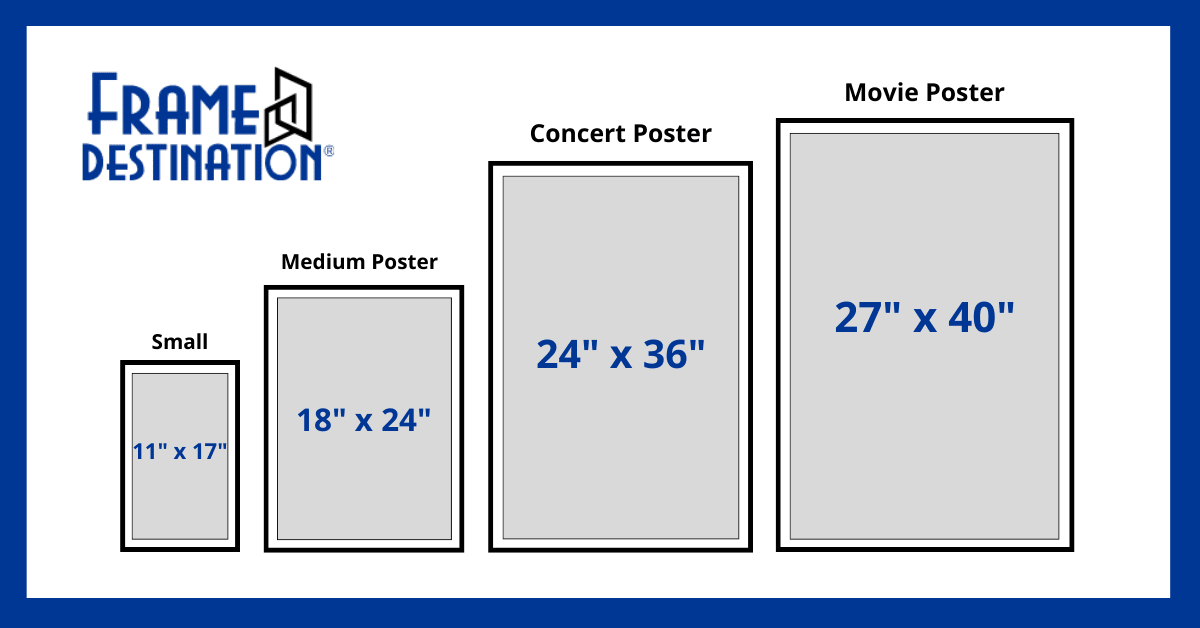
If you’re planning on choosing posters for a collection or simply wish to learn more information about the different types of posters before you pick a size, check out our list to help you choose whether you're purchasing or starting your next poster printing project.
Poster Sizes in Inches vs Centimeters
| US Sizes | Sizes in CM |
|---|---|
| 11 x 17in | 27.94 x 43.18cm |
| 13 x 19in | 33.02 x 48.26cm |
| 16 x 24in | 40.64 x 60.96cm |
| 18 x 24in | 45.72 x 60.96cm |
| 20 x 24in | 50.8 x 60.96cm |
| 24 x 36in | 60.96 x 91.44cm |
| 27 x 40in | 68.58 x 101.6cm |
| 27 x 41in | 68.58 x 104.14cm |
Small Poster Size
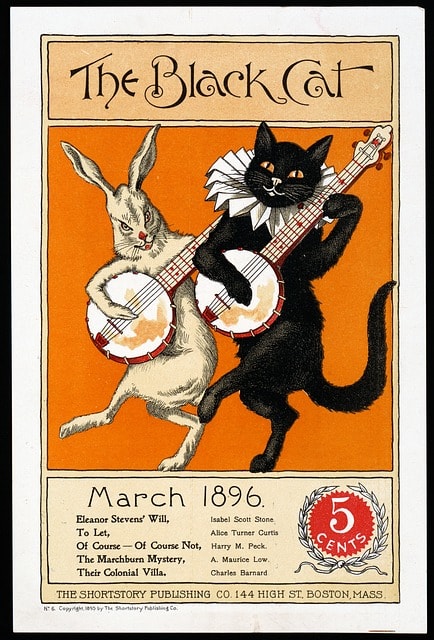
11" x 17"
Standard paper sizes in America are letter (8.5x11 sheet), legal (8.5x14 sheet), and tabloid and ledger (11x17 or 17x11 sheet, based on the orientation). While letter and legal are simply paper sizes used primarily for office and home use — not for display — tabloid and ledger can be used as both assuming proper paper weight is used.
The 11 x 17 posters are the most popular small poster size. These work great in theatres as poster giveaways for movie promotions, as well as for commercial, like small window ads and personal advertisements in public buildings or event venues, on lampposts and bulletin boards, and as handouts where the image is front and center. The relatively small size makes these smaller posters very portable and easy to print in bulk by the thousands to get a message out or promote an event.
Medium Poster Size
18" x 24"
Medium poster sizes include 13x19 and 16x24, but 18x24 is the most popular medium poster size. Used at event venues and on bulletin boards for a more impactful advertisement than its smaller counterpart, this poster format size is eye-catching yet understated — and a perfect size for hanging home decor and filling in empty wall space in your living room .
Large Poster Size
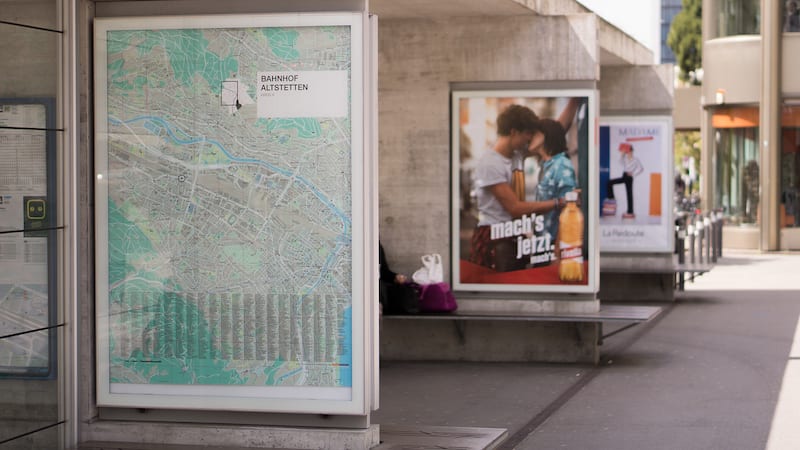
24" x 36"
The two common large poster sizes — 20x24 and 24x36 — are used to make a statement. These large format posters are commonly found in retail stores and malls with high traffic areas as well as in outdoor advertising, as they are large enough to catch the eye of passersby on foot, in a car or on public transport. The 24x36 poster is the most popular large poster size, 2:3 aspect ration, often found at trade shows, exhibits or malls, and its impressive dimensions make it a great conversation piece in your home. There are definitely large poster dimensions like the ones you would find at a bus stop, billboard posters or subway poster but they are not as common especially when printing posters.
Standard Movie Poster Size
Not all film posters are made the same, and there are several different movie poster sizes depending on where and when they were used. The film industry has standardized the size of poster — in fact, you can date a movie poster by its size — so framing movie posters is simply a matter of matching the size it is.
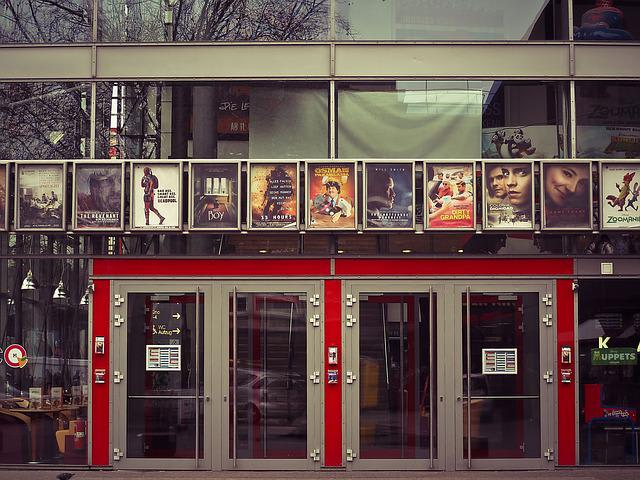
27" x 40"
The 27x40 inches (686x1016 mm) poster is the standard size for movie posters. Also called a one-sheet, this recognizable poster is used inside cinemas to promote new films. Prior to the 1980s, this size was actually slightly larger — 27x41 — so those collecting vintage posters should measure carefully to avoid a too-small frame. Frame Destination carries poster frames for a variety of movie poster dimensions, allowing you to display both modern and vintage printed posters. Browse here for size 27x40.
Concert and Band Posters
For some, it’s not the movie posters they are after — it’s the music events and festivals. Posters for bands, concert posters and gig flyers are popular collectibles among music enthusiasts. Unlike the film industry, however, these sizes are not standardized no matter which printing company or store is used.
A handbill, the smallest band poster, is often 8.5x10 or 8.5x5. Flyers and small posters that are used as advertisements outside the venue are generally 8.5x11. The most sought-after band poster is the one on display at the venue itself; these large concert posters range from 11x17 to 24x36. We have a wide selection of frames for both 11x17 posters and 24x36 posters precision cut in different materials that work great with any design.
Other Common Poster Dimensions
Less common poster dimensions but still a standard size, 11.75x36 posters are used for panoramic prints. These slender posters are often simple art prints, photos or special advertisements; in the home, they make excellent works of art. 8.5 x 11 letter sized posters are even less common. Other mentions include 22 x 28 and large format 40 x 60. It costs more as one can image to print these larger ones as they often require special rolls and sheets with thicker stock.
Lucky for collectors, many of these standard poster sizes have remained the same for years — and will most likely continue to stay in use. To make sure that your poster collection stays pristine, use the right right poster size dimensions and framing supplies to help protect it for years to come. Luckily, if you want to print your own there are a large number of poster printing services that offer templates as well.
(For additional tips and framing standard or custom sizes, check out our guide on How to Frame a Poster) or shop all our poster frames.
What are the most common standard poster sizes?
The most common standard poster sizes are 18x24, 24x36, and 27x40 inches. These sizes are popular because they are easy to find frames for, and they are large enough to make an impact without being too expensive.
What are the common poster formats?
Common poster formats include standard sizes like A4 (8.3 x 11.7 inches), A3 (11.7 x 16.5 inches), and A2 (16.5 x 23.4 inches). Larger formats such as A1 (23.4 x 33.1 inches) and A0 (33.1 x 46.8 inches) are also common for more impactful displays, while custom sizes can be used for specific needs.
What is the typical size for a movie poster?
The typical size for a movie poster is 27x40 inches. This size is known as a one-sheet and is the most common size for movie theaters to display.
What are some popular landscape poster sizes?
Some popular landscape poster sizes include 16x20, 20x24, and 24x36 inches. These sizes are great for displaying panoramic images or landscapes.
What are the standard poster board sizes?
The standard poster board size is 22x28 inches. This size is commonly used for presentations or displays and is easy to find at office supply stores.
What are the dimensions of an 18x24 poster?
An 18x24 poster has dimensions of 18 inches by 24 inches. This size is popular for printing art prints, concert posters, and promotional materials.
Is 16x20 a good size for a poster?
16x20 is a good size for a poster if you are looking for a smaller, more affordable option. This size is great for displaying in a smaller space or for creating a collection of posters.
Written by Mark Rogers
 Mark Rogers is the President and Co-Founder of Frame Destination. With over 20 years of experience in the field, Mark has become a leading authority on framing techniques and best practices, and has earned a reputation for his innovative approaches to custom framing and frame services for photographers and artists.
Last updated February 17, 2025
Artwork doesn’t typically come in standard sizes, but there’s one area where that doesn’t actually ring true: posters. There are many standard poster sizes, including movie posters, advertisements and band flyers, used for both commercial and personal advertisements as well as large format posters — but all these various sizes can be hard to keep […]
Picture frames can be works of art in their own right, and they have been featured as such: some of the world’s best art galleries have dedicated special exhibitions solely to highlight picture frames, including London’s National Gallery and New York’s Metropolitan Museum of Art. There are even auction houses specializing in picture frames, offering interested customers centuries-old frames with price tags in the thousands.
While there are plenty of ways to lower your picture framing costs, including purchasing ready-made picture frames or skipping the archival mat board, these tactics won’t work on these particular frames — namely, the most expensive picture frames in the world.
Leonardo da Vinci’s ‘Salvator Mundi’

In 2017, the art world collectively held its breath when a recently rediscovered original Leonardo da Vinci work, Salvatore Mundi, was finally available for sale; it is one of only 20 known works by the artist. The work of art, which was put up for auction by Christie’s in a frame specially selected for it, fetched a record-breaking price of just over $450 million.
New York-based antique frame and art restoration company Lowy was tasked with framing Salvator Mundi. They selected a 16th-century Italian frame featuring a black finish and gold stenciled details; by itself, the frame is worth up to $50,000 — a price that some very famous works of art have sold for themselves.
Hyundai’s Digital Picture Frame

Details are scarce on this purported digital picture frame from South Korean manufacturer Hyundai, but if it truly does exist on the market, it’s one of the most expensive (digital) picture frames available. Said to be a large, four-panel digital frame that is so large that it can serve a dual purpose as a room divider, the frame has an estimated price of $70,000.
Munch’s ‘The Scream’

Edvard Munch’s famous The Scream was once the most expensive painting sold at auction when the gavel fell at $120 million back in 2012. Though the painting itself merits it as one of the most iconic images in the world, this version of the painting most likely reached such a high price due to the frame in which the painting was sold: the original frame features a rare handwritten poem by the artist himself. There are several versions of this painting, but only this one has the poem — without it, it most likely wouldn’t have reached that price.
Samsung’s ‘The Frame’

A more accessible type of picture frame, Samsung’s The Frame was launched into the market to much ado in 2017. It’s not just a picture frame, though, or even a digital picture frame — it’s actually a television. With a starting price of around $1,000 for the smallest version, the television transforms into a real piece of art when not in use. Because of its interchangeable bevels available in a range of wood finishes, it can easily blend in with your existing décor — just like any other piece of art.
Though all of these famous frames are impressive, custom picture frames don’t have to cost nearly as much. Any of Frame Destination’s selection of wood picture frames and metal frames can you give your home a similar museum-worthy look — all without the hefty price tag.
Picture frames can be works of art in their own right, and they have been featured as such: some of the world’s best art galleries have dedicated special exhibitions solely to highlight picture frames, including London’s National Gallery and New York’s Metropolitan Museum of Art. There are even auction houses specializing in picture frames, offering […]
Displaying a piece of artwork that you’ve saved from a thrift store, flea market or garage sale can bring you a sense of pride, but these prints and paintings are not always in the best condition when you bring them home.
If you don’t want to shell out big bucks going to a professional art restoration service — and your artwork isn’t severely damaged — there are a few ways to spruce up a not-so pristine piece of art.
Refresh the mat board.
Oftentimes, the mat board is the dingiest part of vintage art. White mat board shows even the most minuscule speck of dirt, stains and dullness, so simply replacing it with a fresh mat can breathe new life into old art. You can get creative and use colored mat board as a modern touch or remove the mat board completely to create a whole new look.
Replace the picture frame.
You’ll often find artwork already framed, and old, dusty frames can really bring down the overall appearance of a piece of art. When you’re shopping for thrift store artwork, try to focus your attention on the art within rather than the entire piece. Visualize the artwork in a new picture frame — you may just find that one-of-a-kind piece you’re looking for.
Cut or hide the damage.
It is difficult to remove stains from artwork; you can try to use document cleaning powder and a cleaning pad on paper items before you resort to drastic measures, but it may not be successful if the stain has set. If an old piece of artwork is irreparably damaged, however, you may be able to cut out the unsightly parts and get a new mat board cut to the print’s new size.
You can even make this a craft: collect a few vintage prints that complement each other, such as botanical prints or illustrations of fauna, and order a mat board with multiple openings. Cut out the desired portions of each print and mount them on backing board where they will show through the various openings.
If you’d prefer not to alter the print, use a piece of blank, uncut mat board and cut out a silhouette from the center — a face, an animal, a shape, or anything that covers the damaged portions of the print —and place this over the print. With this method, you create a new and unusual piece of art.
Create new art.
Instead of trying to fix the art, make it your own. The creative trend of “repurposing” unwanted paintings and prints by painting over them has grown in popularity, as seen by artists David Irvine, whose Re-Directed Art series adds whimsical characters to the background, or French artist Blase, who reimagines classics with modern touches.
If you’re not particularly adept with a paint brush, you can instead stencil letters, geometric designs or flourishes over the artwork to creative motivational or quirky prints.
Embrace its flaws.
When all else fails, learn to embrace the flaws in your thrift store artwork. Faded or torn photos may have just the worn, vintage look your living room needs; that slightly damaged painting has character that can’t be replicated. You can even enhance the “damaged aspect” by giving it a picture frame that’s been distressed to shabby chic perfection.
Don’t try this at home!
If you’re looking to truly restore the artwork rather than repurpose it, you may have some luck with DIY art restoration tips —but be careful, as you may irreparably damage the artwork even further.
Removing tape, for example, is discouraged; the Smithsonian Institution Archives’ Collections Care team says that removing tape could tear the image or leave a sticky residue that attracts dirt. Photographs and prints stuck to glass shouldn’t be removed unless you don’t mind the risk of ruining the print completely. If you do want to try, make a copy of the image just in case. There are two methods: scanning the photograph in a flatbed scanner or photographing it through the glass. These options may render varying results due to the thickness of the glazing over the photo. As a third option, a photo restoration specialist can typically assist you in capturing a copy with the highest quality possible.
Displaying a piece of artwork that you’ve saved from a thrift store, flea market or garage sale can bring you a sense of pride, but these prints and paintings are not always in the best condition when you bring them home. If you don’t want to shell out big bucks going to a professional art […]